
The Complete Manhattan Beach Short Term Rental Trash Rules & Compliance Guide
Table Of Content
The Manhattan Beach Short-Term Rental Trash rules require Coastal Zone STR hosts to comply with three layers of regulation: California’s SB 1383 organic waste separation law, the City of Manhattan Beach three-cart waste collection system (green organics, blue recycling, gray landfill), and municipal code rules that govern when trash containers may be placed in public alleys or curbside areas. Under SB 1383, residents and businesses must separate organic waste from landfill trash (CalRecycle – SB 1383). Manhattan Beach provides curbside organics, recycling, and trash collection through its Solid Waste and Recycling Program, which uses the city’s three-cart system (City of Manhattan Beach – Solid Waste & Recycling Programs). Local municipal rules also regulate when carts may be placed in alleys or curbside areas for collection and when they must be removed (Manhattan Beach Municipal Code – Refuse Container Placement).
Short-term rentals (under 30 days) are only legally permitted within the designated Coastal Zone, following a 2022 appellate court ruling. This concentrates all STR activity in the city’s densest residential neighborhoods, where the Sand Section’s narrow alleyways, walk streets, and compact lots make waste management more complex than in traditional long-term rental arrangements.
Transient guests unfamiliar with local sorting rules, collection schedules, and bin placement requirements generate immediate compliance risk for the property owner, who bears legal liability for every violation. STR hosts in the Coastal Zone need a proactive waste management strategy that covers guest education on cart sorting (green for organics, blue for recycling, gray for trash), precise coordination of bin placement within the city’s setout and retrieval windows, and a system for keeping bins clean and compliant between guest turnovers. Non-compliance can lead to fines and jeopardize your rental permit.
Manhattan Beach STR Trash Rules (Quick Summary)
If you operate a short-term rental in Manhattan Beach’s Coastal Zone, your property must follow three layers of waste regulations: California’s SB 1383 organic waste law, the city’s three-cart waste system, and municipal rules for trash container placement and collection timing.
Key Rules for STR Hosts
1. Separate waste using the city’s three-cart system
Manhattan Beach requires all residential properties, including short-term rentals, to sort waste into:
-
Green cart – Organics: food scraps, food-soiled paper, yard waste
-
Blue cart – Recycling: paper, cardboard, metal cans, glass bottles, plastics #1, #2, and #5
-
Gray cart – Landfill trash: non-recyclable plastics, chip bags, diapers, pet waste, and other household trash
Under California SB 1383, organic waste must be separated from landfill trash.
2. Follow the city’s cart placement schedule
Manhattan Beach regulates when trash carts can be placed in alleys or at the curb.
-
Carts may be set out after 10:00 AM the day before collection
-
Trash pickup occurs once per week between 7:30 AM and 6:00 PM
-
Carts must be removed by 10:00 AM the day after collection
Leaving carts in the alley or curbside outside this window can result in municipal code violations.
3. Avoid overflow and contamination
The city requires that:
-
Cart lids close completely
-
Trash be securely bagged
-
Materials be placed in the correct cart
Contamination (for example, plastic bags in the organics cart) may cause the entire load to be rejected or redirected to landfill.
4. STR hosts are responsible for guest compliance
Unlike long-term rentals, short-term rental guests are often unfamiliar with local waste rules. Property owners remain legally responsible for:
-
Proper sorting
-
Cart placement timing
-
Preventing overflowing bins
-
Maintaining clean bin areas
Most enforcement actions occur after neighbor complaints about odor, litter, or visible bins.
5. Violations can trigger escalating fines
Administrative citations typically follow an escalating structure:
-
$250 – first offense
-
$500 – second offense
-
$1,000 – third offense and subsequent violations
Repeated violations can also trigger code enforcement investigations into broader STR compliance.
Practical Tip for STR Hosts
Because guest turnover is frequent, many property managers implement a waste management system that includes:
-
Guest instructions for waste sorting
-
Scheduled cart set-out and retrieval
-
Regular bin cleaning to prevent odors and contamination
These steps help prevent the neighbor complaints that most often lead to enforcement action.
The Legal Landscape of Manhattan Beach STR Waste Management
Manhattan Beach’s zoning laws and court rulings determine who may operate a short-term rental and how those rules connect to waste management obligations. This section summarizes the legal framework that shapes trash compliance for Coastal Zone STR hosts.
Who is legally allowed to operate a short-term rental in Manhattan Beach?
Short-term rental legality in Manhattan Beach is determined by whether a property falls within the California Coastal Zone, a geographic boundary established under the California Coastal Act of 1976. Properties outside this zone are prohibited from offering rentals of fewer than 30 consecutive days under the Manhattan Beach Municipal Code. This legal framework, shaped by city-specific laws and state coastal policy, has direct consequences for waste management compliance.
The city has maintained a ban on short-term rentals in residential zones since 2015. The City Council discussed and proposed a temporary expansion of STR permissions outside the Coastal Zone, but ultimately the measure was not approved, underscoring that the geographic restriction remains firmly in place. The city’s official Short-Term Rentals page states that the Zoning Code does not allow transient uses, including short-term rentals under 30 days, in residential zones (City of Manhattan Beach – Short-Term Rentals). The Planning Commission and City Council adopted this position after extensive public hearing testimony from residents about negative impacts including noise, parking congestion, and visible street trash.
However, the April 4, 2022 Court of Appeal decision changed the regulatory landscape. The court found that Manhattan Beach’s STR ban could not be enforced within the Coastal Zone because it had never been approved by the California Coastal Commission. The ruling centered on public access: the California Coastal Act requires that local zoning regulations preserve maximum public access to the coastline. The case originally proceeded through the Los Angeles Superior Court before reaching the appellate level, where the court found the city’s claim that its original ordinances had always banned short-term rentals to be unsupported. The California Supreme Court subsequently declined to review the case, cementing the ruling (City of Manhattan Beach – Short-Term Rentals).
For operators legally situated within the Coastal Zone, the city requires a business license through business registration with the Revenue Services Division before commencing operations, plus collection and remittance of a 14% Transient Occupancy Tax. For full licensing and permitting details, including TOT remittance forms and deadlines, visit the city’s Transient Occupancy Tax page. To determine whether a property falls within the Coastal Zone, the city directs owners to consult the City’s Zoning Map or Interactive GIS Map (City of Manhattan Beach – Short-Term Rentals).
In California, hosts must also register their business with the appropriate city agencies and comply with applicable zoning regulations before listing a property on platforms like Airbnb or Vrbo. Manhattan Beach’s framework mirrors the approach taken by other cities along the coast, including Santa Monica, which similarly regulates short-term rentals through permit-based systems that balance public access with residential neighborhood preservation.
Why does your operating zone dictate your trash strategy?
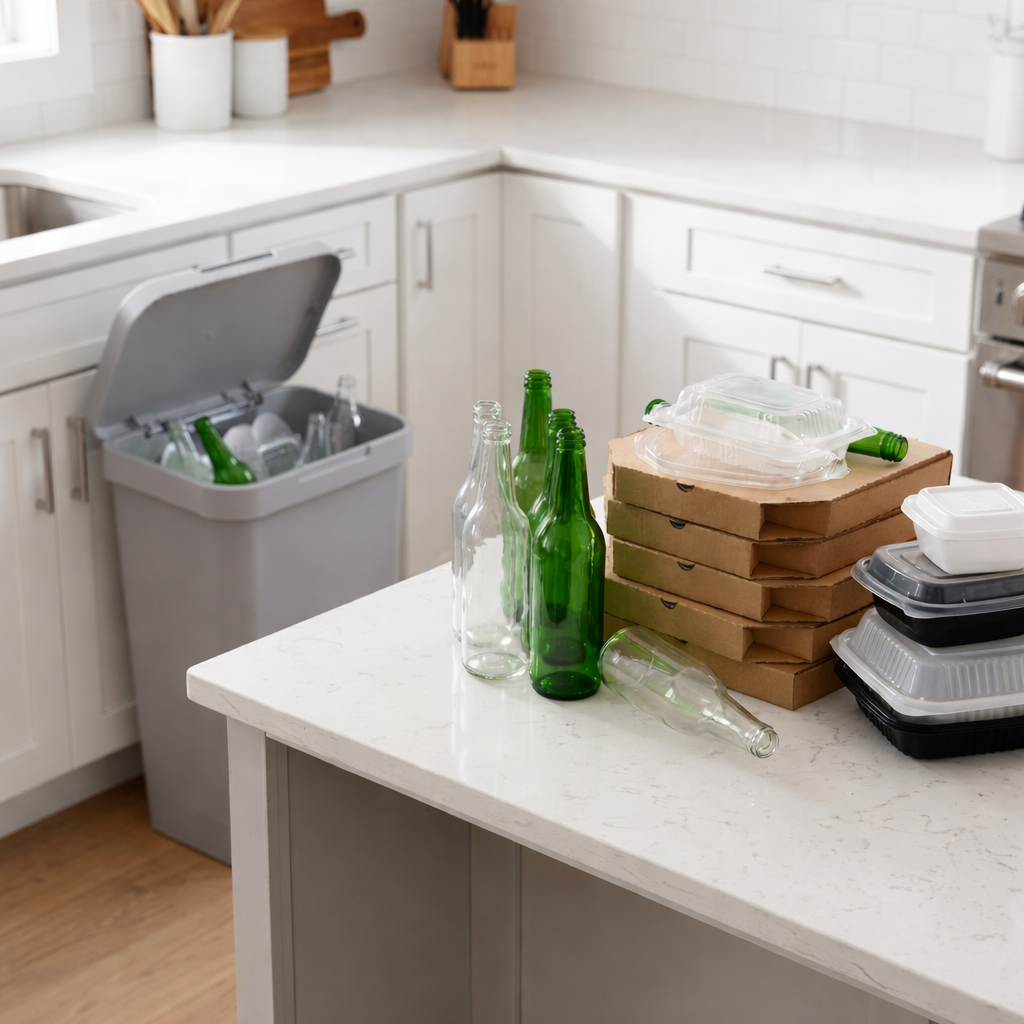
Because Manhattan Beach permits STRs only in the Coastal Zone, owners face tighter space constraints and higher guest turnover than inland landlords. The city’s short term rental regulations concentrate all legal STR activity in areas where these factors amplify the risk of overflowing or improperly sorted bins, making a clear trash strategy essential for every person renting on a short term basis.
Properties operating outside the Coastal Zone must secure long-term tenants (30+ days) to remain compliant with the municipal code. In a traditional long-term lease, the tenant gradually becomes familiar with local collection schedules, cart sorting rules, and neighborhood norms. Over time, the compliance burden naturally shifts from the property owner to the resident.
Coastal Zone short-term rentals face the opposite dynamic. Because the Coastal Act prioritizes public access to the shoreline, and the appellate court approved the position that banning STRs undermines that access, the Coastal Zone remains open to transient rentals while the rest of the city is closed. Transient guests generate concentrated waste profiles heavily skewed toward single-use packaging, food-soiled containers, and glass beverage bottles. A group arriving from out of state for a weekend has no inherent knowledge of Manhattan Beach’s specific cart colors, collection schedules, or California’s mandatory organic waste sorting laws under SB 1383.
This knowledge gap creates a critical liability distinction. Any municipal citations generated by improper waste sorting, overfilled bins, or carts left in the right-of-way outside permitted hours are levied against the residential property owner, not the guest. Neighbor concerns about odors, litter, and overflowing carts are the most common triggers for enforcement action. The city’s Code Enforcement division responds to complaints regarding zoning, property maintenance, illegal dwelling units, and trash container regulations (City of Manhattan Beach – Code Enforcement). A professional bin cleaning service can help hosts reduce contamination, control odors, and avoid the neighbor complaints that trigger enforcement actions.
|
Operational Factor |
Inland Zone (30+ Day Rentals) |
Coastal Zone (Short-Term Rentals) |
|---|---|---|
|
Primary Waste Generator |
Long-term tenant familiar with local rules |
Transient guests unfamiliar with sorting requirements |
|
Waste Profile |
Standard, predictable household volume |
High-volume packaging, glass, food waste |
|
Compliance Liability |
Owner liable but tenant drives daily behavior |
Owner holds absolute liability for guest actions |
|
Logistical Burden |
Low — tenants manage bin placement |
High — requires dedicated staff for bin coordination |
|
Enforcement Risk |
Moderate — tenants viewed as community members |
Severe — neighbors scrutinize and report frequently |
Navigating Waste Management and SB 1383 Compliance
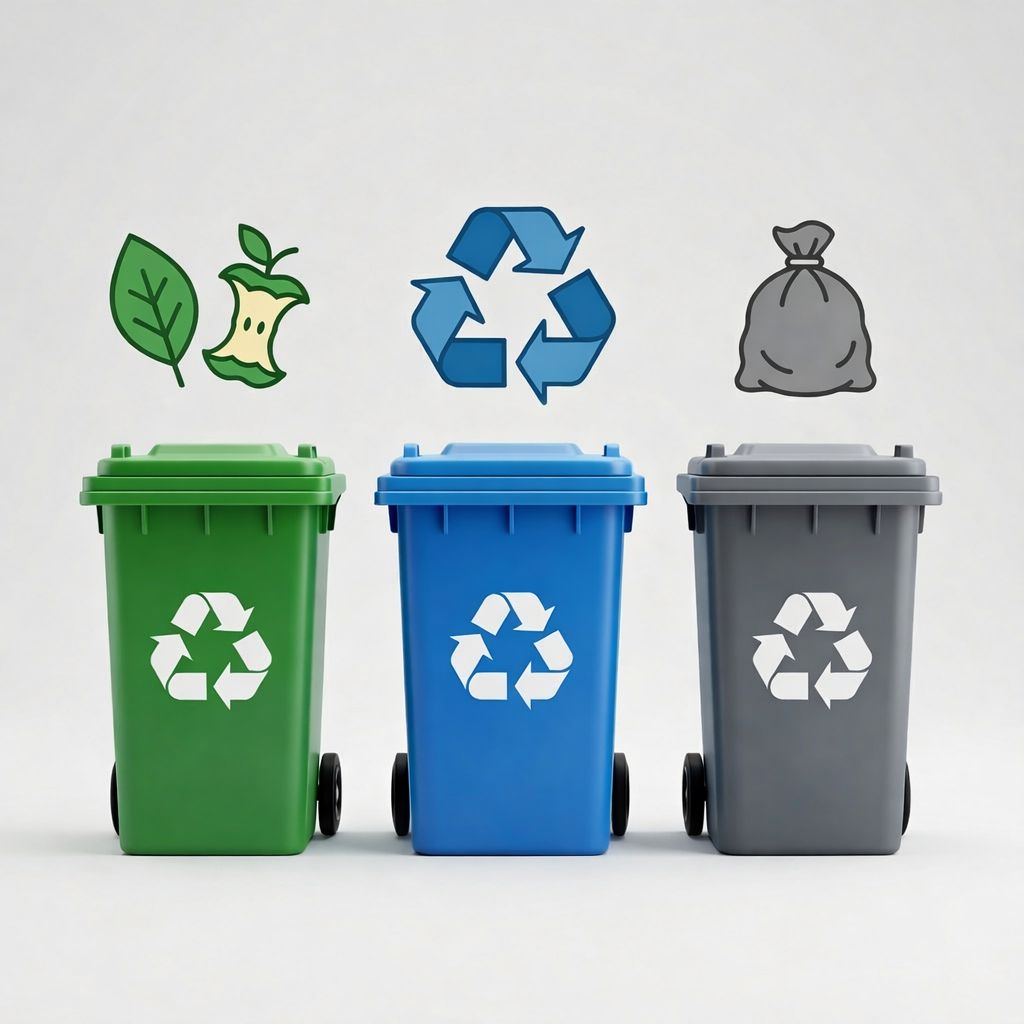
California’s SB 1383 requires everyone to separate organic waste from trash, and Manhattan Beach uses a three-cart system to meet those mandates. This section explains what belongs in each cart and how to stay compliant.
What goes in the Green, Blue, and Gray Waste Management carts?
Manhattan Beach uses green, blue, and gray carts to collect organics, recyclables, and trash. Understanding which materials belong in each bin is important information related to complying with SB 1383 and avoiding contamination fees. This quick reference overview covers the sorting requirements that STR hosts must communicate to guests.
California’s SB 1383, the Short-Lived Climate Pollutant Reduction Act, establishes mandatory targets to reduce statewide organic waste disposal by 75% from 2014 levels by 2025 (CalRecycle – SB 1383). Beginning January 1, 2022, all California residents and businesses are required to separate organic waste from trash and participate in an organics collection program under SB 1383. Food scraps are no longer acceptable in the gray trash cart.
The city’s Solid Waste and Recycling Programs page confirms the three-cart system and outlines that residential organic waste (food, yard waste, and soiled paper) in the green cart must be placed loosely, without bags, with no plastic or bioplastic of any kind (City of Manhattan Beach – Solid Waste and Recycling Programs).
|
Cart Color |
Category |
Acceptable Materials |
Prohibited Materials |
Preparation |
|---|---|---|---|---|
|
Green |
Organics (SB 1383) |
All food scraps (meat, cheese, eggshells, bones); yard waste (grass, leaves, branches under 3″); food-soiled paper (greasy pizza boxes, paper towels, napkins) |
All plastics (including “compostable” or “biodegradable”); plastic bags; palm fronds; pet waste; dirt, rocks, concrete |
UNBAGGED and mixed. Lid must close completely. Wrap in newspaper or paper bag for odor control. |
|
Blue |
Recycling |
Plastics #1, #2, and #5 (bottles, milk jugs, yogurt containers); plastic and paper to-go cups; glass bottles; metal cans; clean, flattened cardboard |
Plastics #3, #4, #6, #7 (grocery bags, Styrofoam, PVC); liquids; waxed or coated containers; food waste |
DRY, CLEAN, and UNBAGGED. Place loose into the cart. |
|
Gray |
Trash (Landfill) |
Non-recyclable household trash; plastics #3, #4, #6, #7; chip bags; loose plastic bags; heavily used textiles; diapers; pet waste |
Food scraps (per SB 1383); yard debris; construction waste; auto parts or tires; e-waste; household hazardous waste (paint, oil, cleaners); medical waste |
All trash must be securely BAGGED. Lid must close tightly. |
A critical detail for STR hosts: the 2020 solid waste contract changed which plastics Manhattan Beach accepts for recycling. Only plastics #1, #2, and #5 go in the blue cart. Plastics #3, #4, #6, and #7 must go in the gray trash cart (City of Manhattan Beach – New Solid Waste Contract).
The city’s recycling information page also advises placing recyclables out the morning of pickup, prior to 7:30 AM, to help prevent scavenging, which is illegal within Manhattan Beach (City of Manhattan Beach – Recycling Information). For STR hosts, this matters because guests who set recyclables out the night before may inadvertently cause material dispersal and neighbor complaints about noise and litter. Regular professional bin cleaning helps reduce odors that attract scavengers and pests, keeping the area around your carts presentable between guest turnovers.
The Sand Section Logistics and Alleyway Pickups
The Sand Section’s narrow alleys and walk streets make bin placement and retrieval particularly challenging. STR hosts in this area need clear guidelines on cart sizing, placement rules, and removal windows to avoid obstructing pickups and to keep bins sanitary between guests.
How do you handle trash pickup in the Manhattan Beach Sand Section?
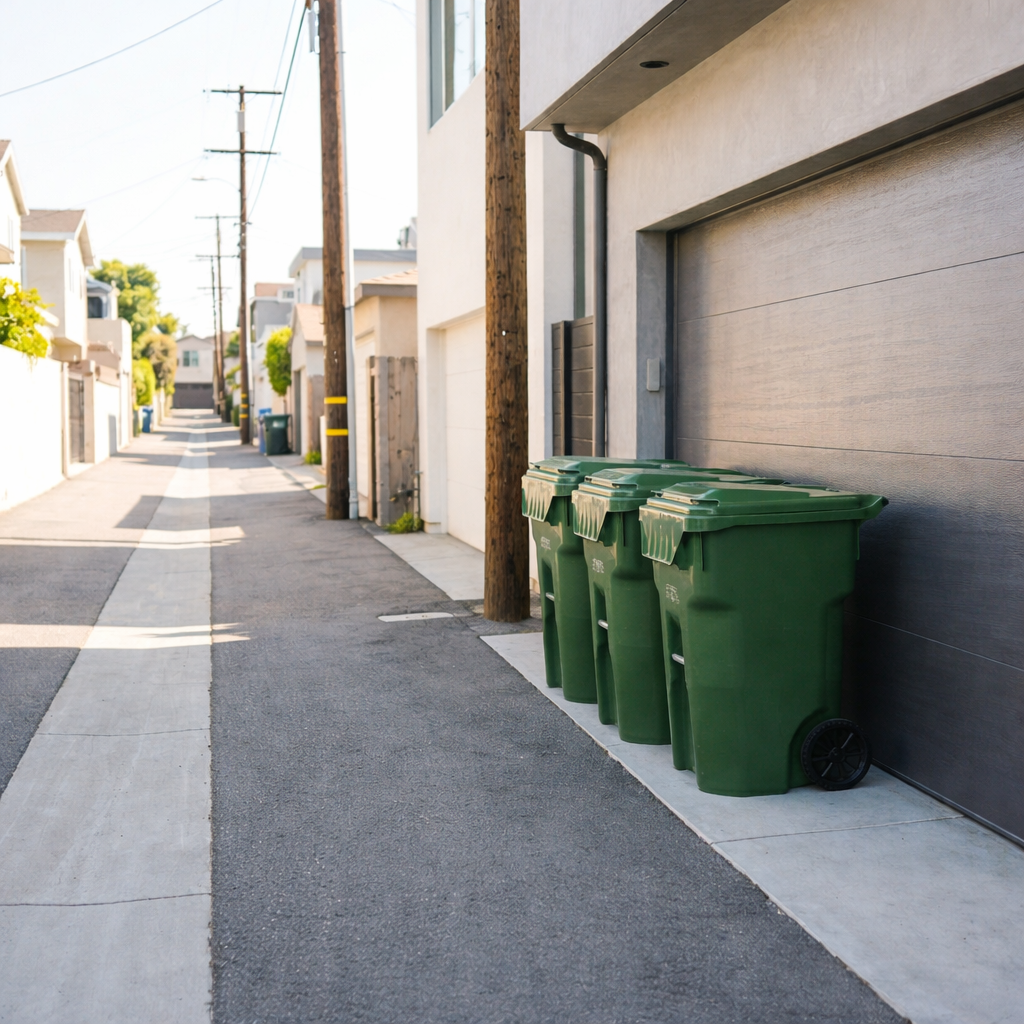
Because of tight alleys and limited storage space, Sand Section properties must select the right cart size and follow strict placement rules to ensure timely pickup and avoid fines. This section provides a helpful overview of the logistical constraints eligible Coastal Zone operators with ocean frontage properties must navigate.
Cart sizes and spatial constraints. The city’s Solid Waste and Recycling Programs page confirms that semi-automated carts are offered in 20-gallon (residential trash only), 35-gallon, 65-gallon, and 95-gallon sizes (City of Manhattan Beach – Solid Waste and Recycling Programs). The 20-gallon option was specifically introduced in the 2020 contract for properties with extreme spatial constraints, a common scenario in the Sand Section. Properties in this area commonly use 35-gallon carts due to limited storage space.
Blue recycling and green organics carts are available in 35, 65, and 95-gallon sizes at no additional cost (City of Manhattan Beach – Residential Carts/Bins). To request new or replacement carts, call (310) 830-7100 or submit a service request through Reach Manhattan Beach.
Placement rules. The Manhattan Beach Municipal Code establishes specific placement requirements. If a property has a rear alley (not a blind alley), containers must be placed in the alley immediately adjacent to the property line, and only during the hours designated for collection. If no alley is served, carts are placed at the adjacent curb.
Carts must be positioned at least three feet from parked cars, mailboxes, and other obstacles to allow automated collection arms to safely operate (City of Manhattan Beach – Solid Waste and Recycling Programs). In the tightly confined quarters of a Sand Section alley, maintaining this clearance requires precise placement.
Collection schedule and timing. All residential customers receive collection once per week. The city is divided into five sections for collection, Monday through Friday, typically between 7:30 AM and 6:00 PM. The city allows cart setout beginning at 10:00 AM the day before collection, and carts must be removed by 10:00 AM the day after collection. The city’s franchised hauler recommends having carts curbside by 7:00 AM on collection day to ensure pickup. Outside the permitted setout window, carts must be kept on the resident’s property and out of public view (City of Manhattan Beach – Solid Waste and Recycling Programs).
Overflow prevention. All trash should be bagged, and containers must not be overfilled. The lid must close tightly. Overflow materials or items placed outside the bins may be subject to an additional charge or will simply be left uncollected (City of Manhattan Beach – Solid Waste and Recycling Programs). For STR properties that generate high volumes during holiday weekends or summer turnover days, the city offers additional blue recycling and green organics carts at no extra cost, which can help redistribute volume without increasing the monthly gray cart fee.
Bulky items. If guests abandon large items such as broken beach furniture or damaged luggage, these items cannot be left adjacent to the bins. Residential customers can schedule up to six free bulky-item pickups per year by calling (310) 830-7100 at least 48 hours before the regular collection day (City of Manhattan Beach – New Solid Waste Contract). STR property managers should actively inspect alleyway bin areas during guest turnovers to intercept bulky waste before it triggers a code violation.
|
Sand Section Constraint |
Regulatory Requirement |
STR Operational Impact |
|---|---|---|
|
Cart Setout Timing |
City allows setout after 10:00 AM day before; carts due back by 10:00 AM day after collection |
Requires dedicated staff to retrieve bins independent of guest checkout |
|
Spatial Clearance |
3-foot clearance from vehicles and obstacles |
Difficult in narrow alleys; requires precise placement |
|
Overflow |
Lids must close; materials outside may not be collected |
High guest volume demands additional recycling/organics carts |
|
Bulky Items |
48-hour advance notice for dedicated pickup; 6 per year |
Cleaning crews must intercept large items during turnover |
Enforcement, Fines, and Neighborhood Relations
City code enforcement relies on neighbor complaints and strict timing rules for setting out and retrieving carts. Non-compliance can lead to escalating fines and strained neighbor relations, making proactive bin management and regular cleaning essential for STR operators.
What time must trash bins be removed from the curb in Manhattan Beach?
Carts may be placed out after 10:00 AM the day before collection and must be removed by 10:00 AM the day after collection. The city’s franchised hauler recommends having carts out by 7:00 AM on collection day to ensure pickup. Carts left in the public right-of-way outside the city’s permitted window constitute a municipal code violation that can trigger neighbor complaints and Code Enforcement investigations.
The city’s official Solid Waste and Recycling Programs page establishes this setout window: 10:00 AM the day before through 10:00 AM the day after collection. Outside this window, carts should be kept on the resident’s property and out of public view (City of Manhattan Beach – Solid Waste and Recycling Programs). The 7:00 AM hauler recommendation is an operational best practice, not a legal deadline, but following the tighter timeline helps minimize visibility in dense residential neighborhoods.
For STR operators, this timing creates a primary operational vulnerability and is among the most important information related to day-to-day compliance. Unlike a permanent resident in one of Manhattan Beach’s residential neighborhoods who routinely retrieves bins after work, transient guests have no incentive to bring bins back to the property.
Consider this scenario: a guest checks out Monday morning and trash collection occurs Tuesday afternoon. The bins may sit exposed in the alley until the cleaning crew arrives Thursday for the next check-in. Because the bins remain past the 10:00 AM Wednesday post-collection deadline, the property is in direct violation of the municipal code.
Hosts should coordinate dedicated bin retrieval runs, often through local property management services, that operate independently of guest checkout schedules. A professional curbside bin cleaning service like Wash Bins can be scheduled to coincide with cart retrieval, ensuring bins are sanitized, deodorized, and returned to out-of-view storage within the permitted window.
How do neighbor complaints trigger Code Enforcement fines?
Neighbor complaints are the main trigger for code enforcement actions against STR hosts. Keeping bins tidy, properly sorted, and removed on time helps prevent the fines that follow from a single phone call to the city. The city’s Code Enforcement Officers conduct regular patrols but heavily prioritize responding to active complaints regarding property maintenance, trash container regulations, and zoning violations (City of Manhattan Beach – Code Enforcement).
Residents can report suspected violations by emailing Code Enforcement at code@manhattanbeach.gov or calling (310) 802-5518. The city requests that reporters include the address, photos, time of observations, and any other pertinent information to assist the investigation (City of Manhattan Beach – TOT). The code enforcement voicemail is available 7 days a week, 24 hours a day.
Good Neighbor Brochure requirement. Manhattan Beach requires STR owners to provide guests with a city-mandated Good Neighbor Brochure before occupancy. The brochure outlines expectations for noise, parking, and trash disposal. Guests must sign a written acknowledgment that they understand the conduct restrictions and accept legal responsibility for compliance by all persons present at the property. A copy of the brochure must also be posted adjacent to the front door within the rental unit.
Escalating fine structure. The city’s TOT page describes the penalty structure for STR-related violations. Administrative citations follow an escalating schedule: $250 for a first offense, $500 for a second offense, and $1,000 for a third and each subsequent offense. Property owners must pay these fines promptly, as delinquent payment can result in additional penalties. For properties operating outside the Coastal Zone, these fines are imposed per day. For the current fee schedule, visit the city’s Transient Occupancy Tax page.
A complaint that begins with overflowing bins or carts left past the deadline can escalate rapidly when investigators discover broader compliance issues such as missing business licenses or TOT non-remittance. For hosts who have already passed safety inspections and obtained proper licensing, maintaining clean, odor-free bins is one of the most effective ways to avoid the kind of neighbor-driven enforcement that puts the entire account at risk. Dirty, foul-smelling carts are among the most common triggers for neighbor complaints in high-density areas like the Sand Section and El Porto.
How Wash Bins Helps Manhattan Beach STR Hosts Stay Compliant
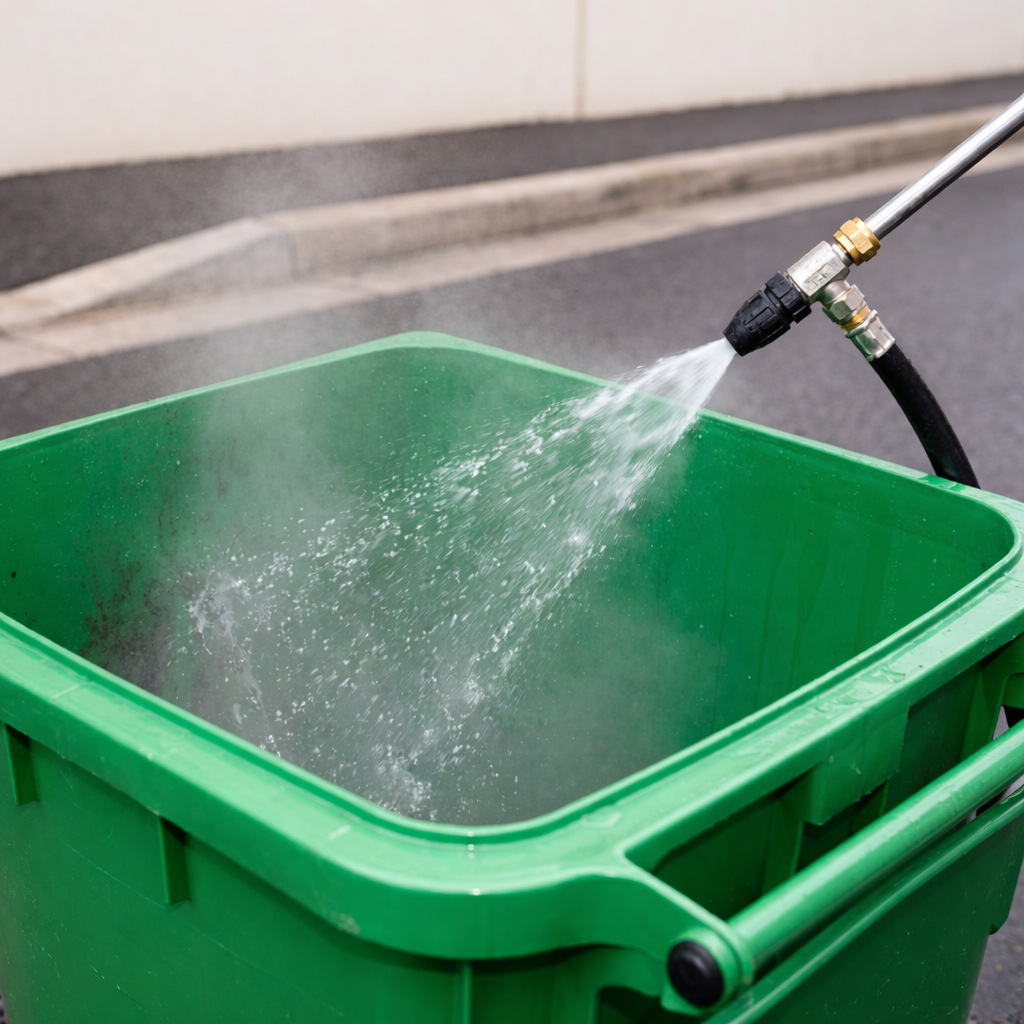
Professional curbside bin cleaning eliminates the contamination residue, odors, and bacteria buildup that accumulate in green organics and gray trash carts between collection days.
What Wash Bins does for STR properties:
-
Three-cart cleaning aligned with the city’s green, blue, and gray sorting system. Wash Bins cleans all three carts to reduce cross-contamination residue that can lead to load rejection and additional fees.
-
Odor and bacteria removal using high-pressure hot water sanitization. Organic waste in green carts generates strong odors between collections, especially in warm coastal conditions. Regular cleaning prevents the smells that trigger neighbor complaints.
In a city where a single neighbor complaint can initiate an enforcement investigation, keeping bins clean and odor-free is not just maintenance. It is a compliance strategy that protects your rental permit, your neighborhood relationships, and your bottom line.
Schedule your bin cleaning today. Contact Wash Bins to set up recurring curbside service for your Manhattan Beach STR property and maintain hygiene with trash can cleaning naturally performed using eco-safe curbside sanitizing.